
November 9, 2026
Uneven Skin Tone: How to Protect Your Skin Before Considering Pigmentation Treatment

Uneven Skin Tone: How to Protect Your Skin Before Considering Pigmentation Treatment
If you are comparing pigmentation treatment in Singapore, start with two useful questions: what is causing the colour change, and what can you do each day to stop making it worse? A dark patch after a breakout, a recurring area across the cheeks and a changing individual spot do not necessarily need the same approach.
You do not have to choose a laser before asking for help. At Dr. Chio Aesthetic and Laser Centre, Bedok, you can enquire about a skin assessment and discuss your concerns before deciding on treatment. Meanwhile, a manageable protection routine and a clear record of your skin history can make that conversation more useful.
First, describe the concern without diagnosing it
Write down where the pigmentation appears, when you first noticed it and whether something happened beforehand. For example: “Flat brown marks appeared where I had pimples,” or “The patches across my cheeks keep becoming more noticeable.” These observations are more helpful than arriving certain that every patch is melasma.
Skin inflammation and irritating products can leave darker marks, especially in darker skin tones. Treating the underlying cause matters: continuing breakouts or irritation can keep producing new marks while you try to fade old ones. The American Academy of Dermatology’s dark-spot guidance explains why identifying that cause comes first.
Bring a list of skincare products and previous procedures, including anything that made your skin sting or darken. Record relevant medicines and changes in your health, but do not stop prescribed treatment on your own.
Build a sun-protection routine you can actually maintain
A routine is easier to follow when it fits your day. Think about the walk to transport, outdoor lunch breaks, school pickups and weekend activities, rather than reserving protection for a beach holiday.
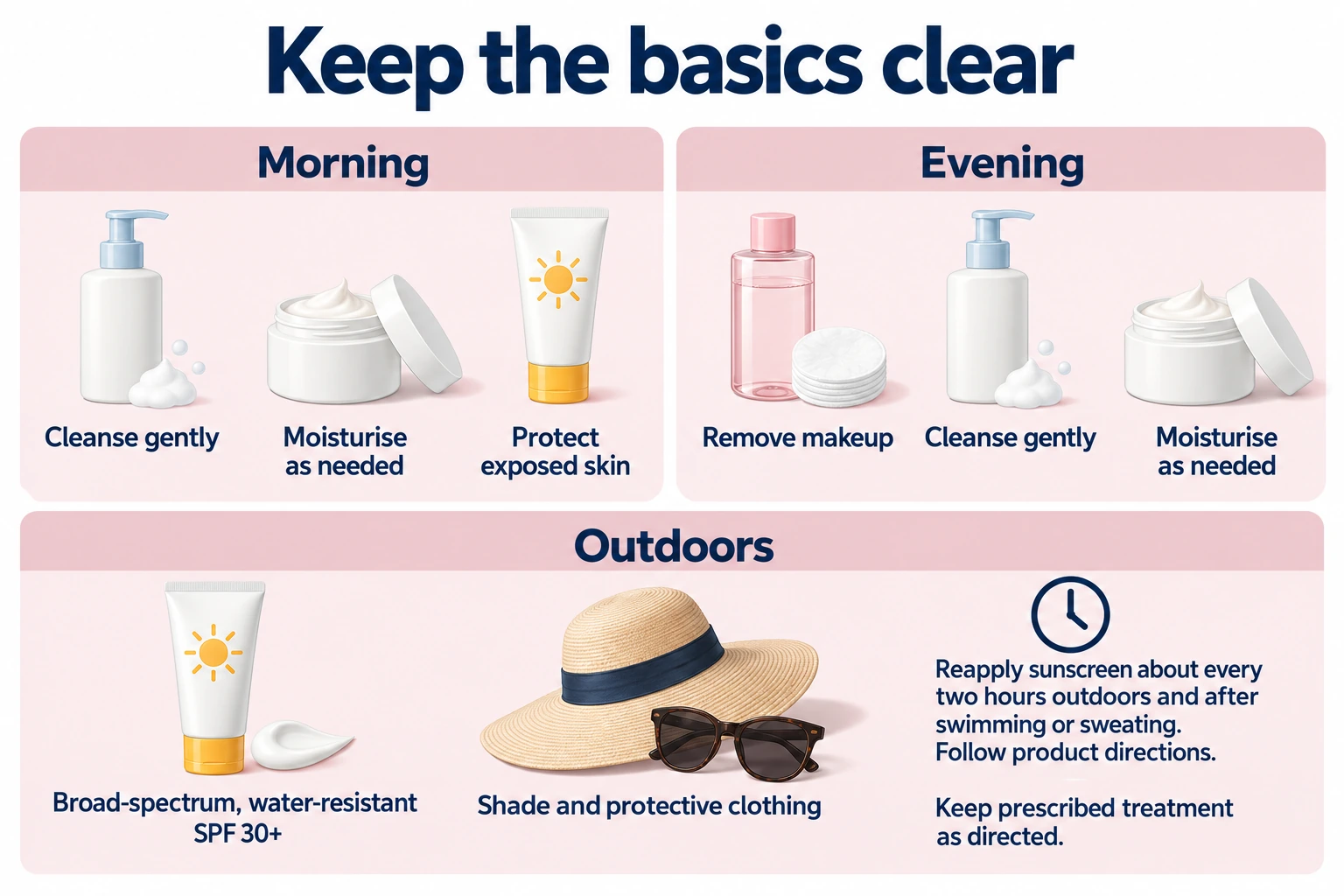
For melasma, the AAD recommends daily sun protection: a broad-spectrum, water-resistant sunscreen with SPF 30 or higher, alongside shade and protective clothing. Apply it before going outdoors and reapply at least every two hours outdoors, as well as after swimming or sweating. Follow the product instructions.
If melasma is a concern, ask about a tinted sunscreen containing iron oxide. It can add protection against visible light, which can worsen melasma. Tint alone does not tell you everything: check the ingredients and sun-protection label.
Turn those recommendations into a simple plan:
- Choose a morning cue. Keep sunscreen beside the products you already use so it becomes part of getting ready.
- Plan for reapplication. Carry it when you will be outside and set a reminder if that helps.
- Add shade. Decide where a hat, umbrella or shaded route could fit your usual journey.
- Review comfort. If your sunscreen repeatedly stings, ask for help finding a suitable alternative rather than abandoning protection.
The aim is a repeatable habit, not an elaborate routine that lasts three days.
Avoid the “more products, faster results” trap
When pigmentation bothers you, it is tempting to add another brightening serum, scrub harder or increase exfoliation. Irritation can itself contribute to dark marks, so repeatedly pushing through burning or stinging is not a useful measure of progress.
Keep a product list with the date you started each item. If you are introducing several new products together, it becomes difficult to explain which change preceded a reaction. Ask a clinician how to simplify the routine if you are unsure, particularly when you already use prescribed skincare.
You can also take occasional, unfiltered photographs for your own records. Use similar lighting, distance and camera settings. Treat them as a conversation aid rather than proof that a product is working: shadows, makeup and exposure can change how pigment looks. There is no need to post these photographs publicly to ask about an appointment.
Where clinic treatment may fit
At Dr. Chio Aesthetic and Laser Centre, Bedok, you can discuss CuRAS Laser and other pigmentation-treatment options after your skin has been assessed. The aim is to connect the treatment with the cause of your uneven tone and the improvement you want to see.
A useful consultation should establish what the pigmentation is, whether the skin is currently irritated, what has already been tried and what improvement would matter to you. The next step may involve daily care, a clinician-directed treatment plan or discussion of a procedure. Ask why the proposed approach fits your concern and what the alternatives are.
For melasma specifically, laser outcomes vary. Procedures can sometimes worsen pigmentation or leave lighter areas; recurrence also matters when planning treatment. The British Association of Dermatologists’ melasma information explains these limitations. A laser is therefore not the answer to every dark patch, and a course of treatment does not remove the need for ongoing protection.
Before agreeing to a procedure, ask:
- What condition are we treating, and which part of it is the proposed treatment intended to improve?
- What pigment changes or other side effects are relevant to my skin?
- What recovery and aftercare should I plan for?
- How will we assess progress, and when might the plan change?
- What is included in the quotation, including reviews and any recommended course?
These questions connect the treatment to your actual goal rather than the appeal of a machine name.
When a spot needs medical assessment first
A spot that is growing, bleeding, changing or failing to heal should be medically assessed before anyone treats it as a cosmetic pigmentation problem. The AAD advises assessment of suspicious or changing spots. Do not delay that assessment while testing a brightening routine.
Frequently asked questions
Will sunscreen remove my existing pigmentation?
Sun protection helps prevent additional light-related worsening and supports management, but it does not establish the cause or guarantee clearance. Persistent pigmentation deserves a plan matched to the diagnosis.
Is CuRAS suitable for all pigmentation?
No single device should be assumed suitable for every patch. Dr. Chio Aesthetic and Laser Centre, Bedok offers CuRAS; ask whether it is relevant after the doctor assesses your skin and history.
What should I bring to a pigmentation consultation?
Bring your product and medication list, previous treatment details, your main questions and any useful photographs showing changes. Mention previous irritation or darkening after treatments, and explain how much recovery time you can accommodate.
Ask about pigmentation assessment in Bedok
If you are unsure what your pigmentation needs, enquire about a consultation at Dr. Chio Aesthetic and Laser Centre, Bedok, 158 Bedok South Ave 3 #01-581, Singapore. You can also WhatsApp the clinic on +65 9651 1224 to ask about appointment availability and consultation fees. Start with your concern; you do not need to arrive with a treatment already chosen.